
Installing new safety hardware is a practical yet essential task. Whether you’re fitting Armco barriers around a warehouse route or adding security bollards in a car park, these measures help prevent collisions and protect people and buildings.
Going from identifying a safety issue to resolving it with bollard or barrier installation can often mean going through planning permission. What kind of permission – or if you actually need it – depends on location, how visible the equipment is, and whether it changes access or sightlines on or close to council-controlled areas.
This guide explains the rules for private property and public space, how size and visibility influence approval, and what to check before work begins.
If you are unsure which product best suits your layout, read Armco Barriers vs Bollards.
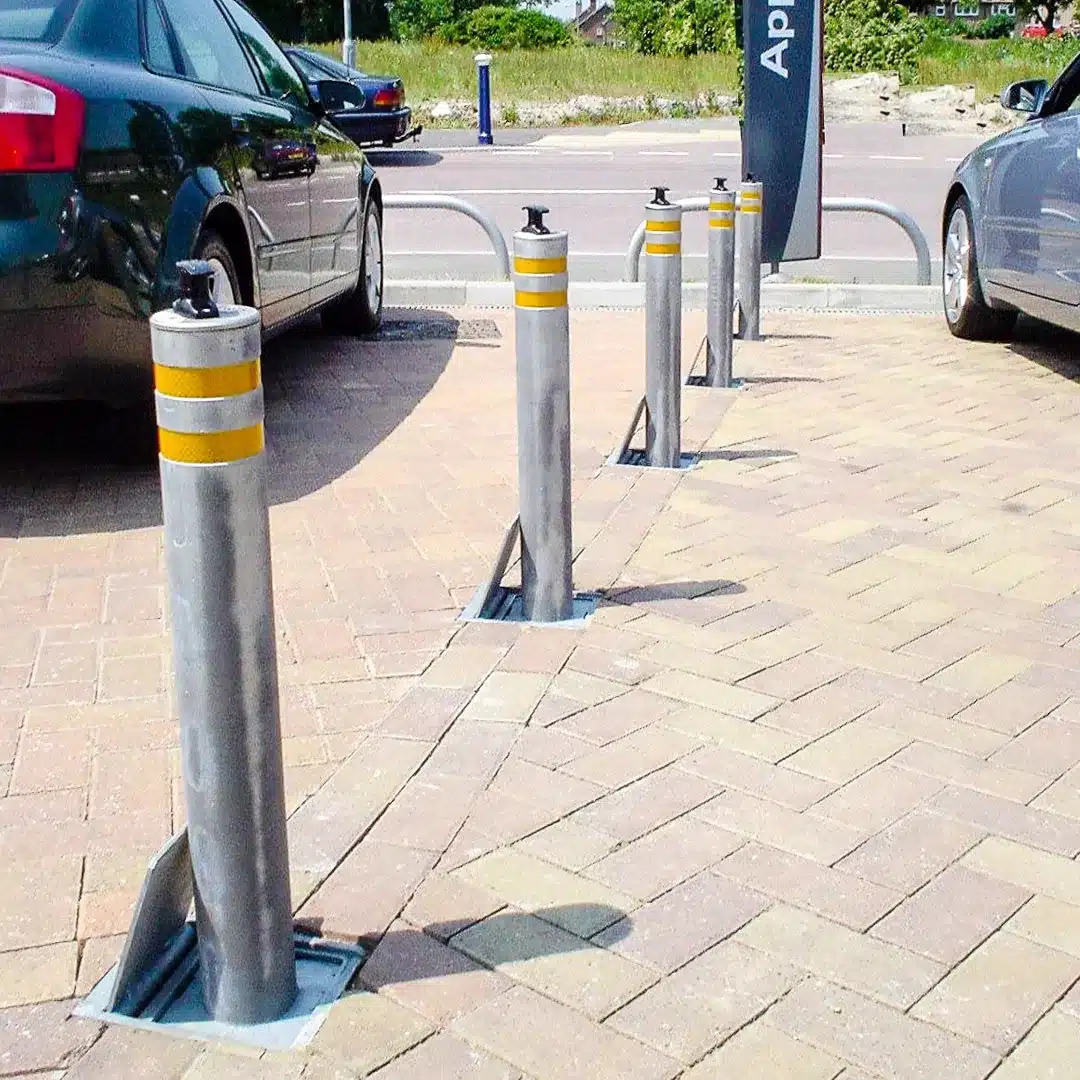
Planning rules for bollards and barriers: private vs public land
If your installation is entirely within your boundary, for example in a driveway, service yard, or private staff car park, you are less likely to need formal permission.
Keep clear records of your layout and product specifications, as these can be useful if questions arise later.
Encroachment onto public space changes things. Anything that touches a pavement, verge, highway, or public right of way usually requires approval from your local authority or highway department.
Treat shared or common land the same way. Check ownership early and obtain written consent from the landowner or management company. A quick Land Registry search can confirm boundaries and save time in the long run.
If you are protecting high-traffic or shared sites, read our article on Barriers and Bollards in Different Types of Car Parks for practical placement ideas.
Size, height, visibility, and design of bollards and barriers
The larger and more visible an installation is, the more likely it is to require planning approval. Tall posts, illuminated units, long runs of vehicle restraint systems, or barriers positioned close to junctions can all affect sight lines for drivers and pedestrians.
Councils often ask for drawings that show visibility splays and pedestrian routes before granting permission.
Heritage settings are even stricter. Small external changes to a building in a conservation area, or near a listed building, can still require planning permission. When you specify bollards or barriers, aim for sympathetic finishes and avoid visual clutter. Thoughtful detailing can help to streamline the decision.
If you are installing barriers indoors or in operational areas with limited space, our warehouse protection barriers include low-level guards, posts, and end protection options that provide quick, compliant safety solutions.
Permitted development and planning rules for bollards and barriers
In England, some minor works fall under permitted development rights. This can include low-impact safety posts or short barrier runs on private land, provided they remain within height, location, and usage limits.
However, local councils can restrict these rights using Article 4 directions. If your site is in one of these areas, you should assume that planning permission will be needed.
There are also other considerations. Building control may need to review your plans if the work connects to ramps, steps, retaining walls, or other structural elements. Workplace safety regulations continue to apply, particularly in relation to pedestrian routes and edge protection near loading areas. If your installation alters traffic movement or access on a shared site, you may also need a Traffic Regulation Order or a brief consultation with the highway authority.
Before starting any large project, it is wise to map out your layout and quantities using our Armco barrier calculator. This tool helps estimate material requirements and ensures that your barrier runs are compliant and correctly spaced.
Rule of thumb for bollard and barrier planning
- Residential driveways or private land
Small bollards or retractable posts for light-vehicle control are usually permitted without formal application, unless your property is in a protected area or subject to local restrictions.
- Commercial or public-facing sites
Expect to seek approval when installing Armco barriers, security posts, or similar equipment that changes vehicle access, traffic flow, or parking layouts. - Listed buildings, conservation areas, or Article 4 zones
Always apply for planning or listed building consent in advance. Securing approval early is much quicker and simpler than trying to resolve issues later.
If you’re at the early stages of planning a larger installation, our guide on How to Choose Armco Barriers explains how to select the right system for your site and risk profile.
Practical steps before you install
- Confirm boundaries using a title plan, and then clearly mark them on site.
- Check local planning policy for Article 4 restrictions, heritage designations, or visibility requirements.
- Prepare a simple layout showing barrier locations, clear widths, and sightlines.
- Keep product data to hand, as impact ratings and fixing details often resolve technical queries quickly.
When planning permission is and isn’t needed for barriers and bollards
| Scenario | Planning Permission Usually Not Required | Planning Permission Usually Required |
| Private residential property (e.g. driveway, garden) | Small bollards or short barrier runs fully within your boundary. No change to access or public visibility. | If property is listed, within a conservation area, or affected by an Article 4 direction. |
| Private commercial or industrial site | Internal yard barriers, warehouse protection, or bollards that don’t alter vehicle access or external appearance. | Installations affecting public access, visibility splays, or external building elevations. |
| Public land, pavement, highway verge, or shared car park | None. Always check with the local council or highway authority first. | Any installation encroaching onto or restricting public rights of way, pavements, or shared access. |
| Conservation areas or near listed buildings | Minor internal barriers not visible from public areas. | Any external barriers or posts that alter the character, setting, or appearance of the site. |
| Common or shared land (e.g. business park, multi-tenant site) | With clear written consent from the freeholder or management company. | Without ownership rights or permission from the landowner or estate manager. |
| Temporary or removable installations | Short-term safety barriers for site works, if within your boundary and under safety regs. | Long-term or semi-permanent installations visible from public land or near a highway. |
Contact Us
We manufacture all our products in Yorkshire and ship across the UK. Our Armco barriers and bollards are built for fast installation and reliable performance, supported by straightforward advice from a team that installs this equipment every day.
Contact us on (01977) 666 818 or email sales@ctsafetybarriers.co.uk. We will help you choose a compliant, long-lasting setup for your project.
Frequently Asked Questions
Do I need planning permission to install bollards or barriers on private land?
In most cases, no. If the installation is entirely within your boundary and does not alter visibility or access, it will usually count as permitted development. However, you should always check if your property is listed, within a conservation area, or affected by an Article 4 direction, as these will remove permitted development rights and require formal consent.
Who grants permission for installations near a public road or pavement?
If any part of your installation touches public land, including pavements or verges, you’ll need consent from your local planning authority or the highway authority. Contact them before starting any excavation or drilling as they can confirm whether a full planning application or simple consent notice is required.
What happens if I install barriers or bollards without planning permission?
If permission is required and not obtained, the local authority can take enforcement action. This may include asking you to apply retrospectively or being asked to remove the installation at your own cost. Getting approval up front avoids unnecessary disruption and expense.
What if my installation changes how an area is used?
Larger barrier or bollard projects can trigger a change of use review under planning law if they significantly alter how a space is used, such as converting a shared car park into private access. It’s best to check with your local authority early, especially for commercial or public sites.
Do planning rules differ in Scotland, Wales, and Northern Ireland?
Yes, slightly – the guidance in this article applies to England. Each devolved government sets its own planning framework, so you should confirm the requirements with the local planning authority if your site is outside England.
How can I check if my property has planning restrictions?
Contact your local council’s planning department or use their online portal to see if your area is affected by conservation status, Article 4 directions, or listed building controls. The Land Registry can also confirm boundary ownership before work begins.