
Telescopic security bollards are widely used to control vehicle access. But the real question is: how effective are they in practice?
This guide explains how telescopic bollards operate, how they compare to fixed posts, where they’re most useful, and what to consider for installation and upkeep.
What are telescopic security bollards?
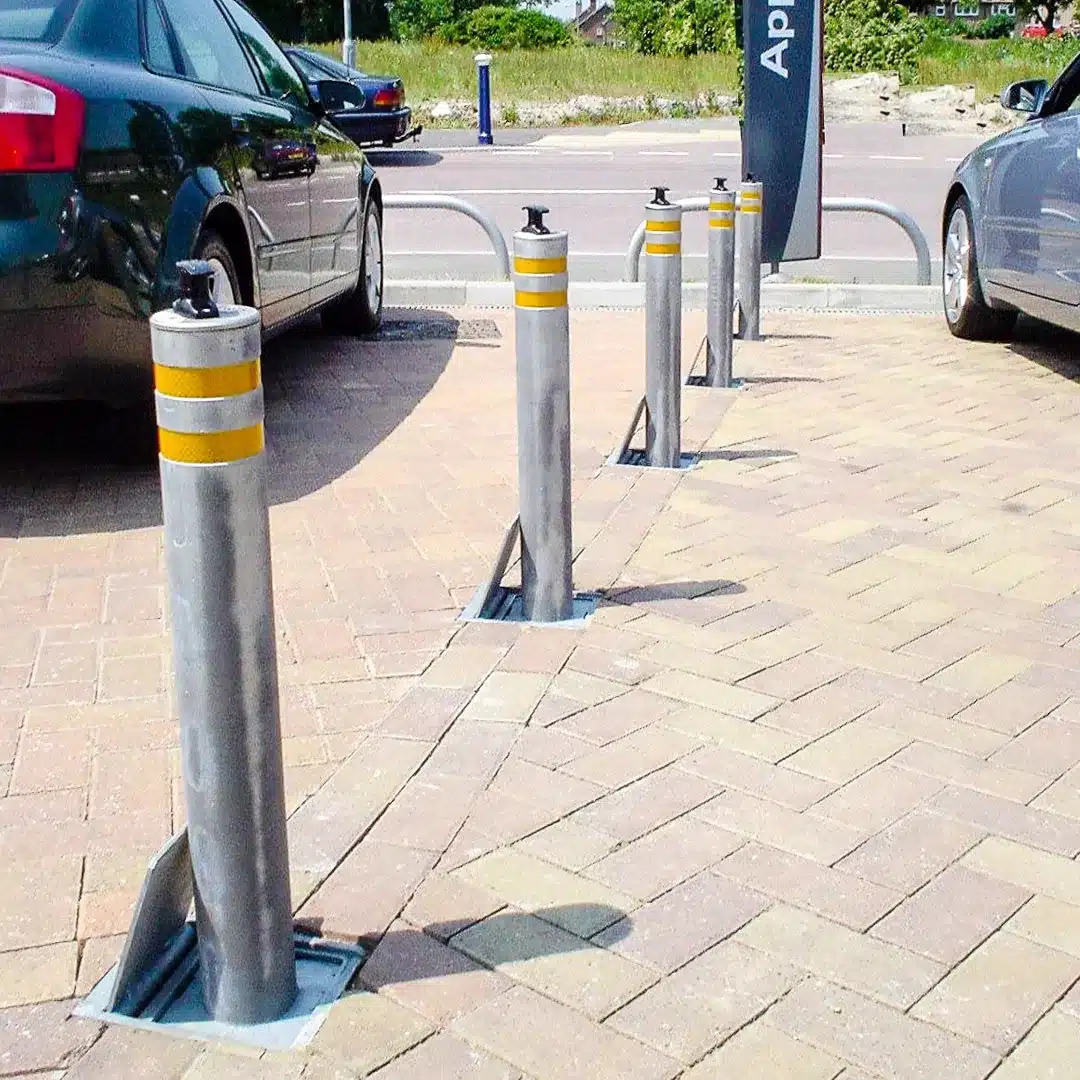
Telescopic security bollards – sometimes called retractable bollards or telescopic security posts – are steel posts that can be raised and retracted as needed.
A simple push-button locking mechanism or automatic sensor makes the post quick to secure or release without specialist tools.
Raised and locked, the post blocks vehicle entry or exit. Lowered, it drops fully into a ground receiver, so the entrance remains clear. This makes them well suited to places where vehicles need to get through at certain times of day, and security is required at others.
Where do telescopic security bollards work best?
Telescopic bollards work best for:
- Vehicle forecourts and motor dealerships
- Private driveways and residential parking
- Commercial premises and industrial sites
- Car parks with controlled opening hours
- Areas protecting high-value equipment
How strong are telescopic bollards compared to fixed bollards?
Telescopic bollards offer solid resistance when locked upright. Made from heavy-duty galvanised steel, they’re typically chosen for access control and deterrence rather than constant high-impact protection. A retractable post provides flexibility, allowing you to secure an entrance when required, then reopen it without removing the barrier.
Fixed bollards, however, are made from steel or stainless steel, providing permanent protection and impact resistance. Sites with a higher risk of deliberate vehicle impact may be better served by fixed bollards or a barrier system, depending on the level of protection required.
Do telescopic bollards actually deter theft and unauthorised access?
Yes, with the right specification and installation, telescopic bollards act as a strong deterrent.
Their presence is obvious, which helps discourage opportunistic attempts at theft. When locked upright, they also form a physical barrier that prevents vehicles from being driven in or out of a protected area.
How to install and maintain telescopic bollards
Telescopic bollards are installed into a ground receiver so the post can retract fully below surface level. Ground preparation is important, particularly drainage, as standing water in the receiver can shorten service life and affect how smoothly the bollard operates.
Ongoing maintenance is straightforward, but worth doing regularly:
- Keep the receiver clear of debris and grit
- Make sure water can drain away effectively
- Clean and lubricate periodically
Installed properly and looked after, retractable bollards remain easy to use and dependable in day-to-day operation.
Are telescopic bollards legally required?
No, telescopic bollards are not a legal requirement.
They’re typically installed as a preventative measure where vehicle entry needs to be controlled without permanently blocking access.
A maximum gap of 1.2 metres between bollards is recommended, but spacing and layout should always reflect pedestrian flow, accessibility, and the specific risks on your site.
Do telescopic security bollards actually work?
In short, yes. They work particularly well when:
- You need to control who can drive in and out, rather than permanently block an opening
- A visible security measure is part of the deterrent
- The site needs flexibility across the day
- Installation and maintenance are planned from the start
They’re a practical way to tighten access control without making everyday operations awkward.

Need advice on telescopic bollards for your site?
CT Safety Barriers manufactures Sold Secure-approved telescopic bollards in the UK, with a range of sizes and finishes to suit different environments and security needs.
If you’re unsure which retractable bollard is right for your entrance, driveway, forecourt, or car park, our team can help you choose the right specification and layout, with clear, practical advice you can act on.